Case Study
Cajon Valley USD: Enhancing Student Safety with Gaggle
CALIFORNIA | 5,001 - 25,000 STUDENTS | SAFETY MANAGEMENT FOR GOOGLE
Rolling out a 1:1 Chromebook Program
The Challenge:
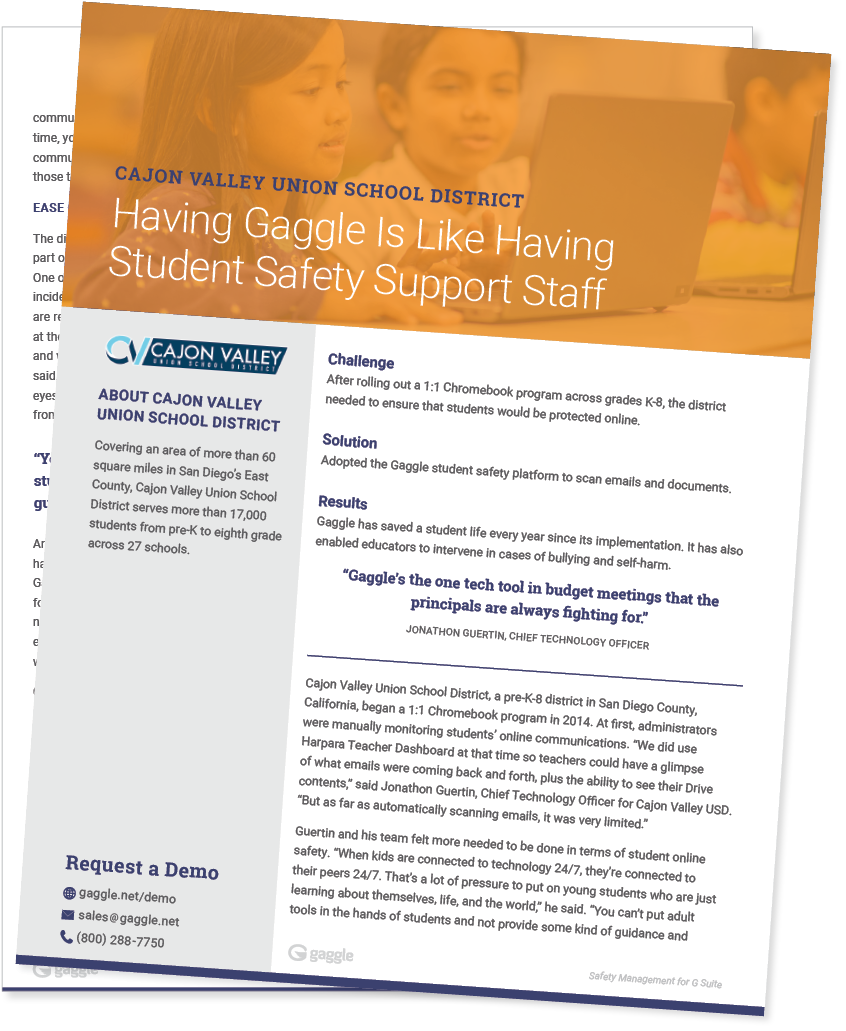
Covering an area of more than 60 square miles in San Diego’s East County, Cajon Valley Union School District serves more than 17,000 students from pre-K to eighth grade across 27 schools. After rolling out a 1:1 Chromebook program across grades K-8, the district needed to ensure that students would be protected online.
At first, administrators were manually monitoring students’ online communications. “We did use Harpara Teacher Dashboard at that time so teachers could have a glimpse of what emails were coming back and forth, plus the ability to see their Drive contents,” said Jonathon Guertin, Chief Technology Officer for Cajon Valley USD. “But as far as automatically scanning emails, it was very limited.”
Implementing a Proactive Student Safety Platform
The Solution:
Guertin and his team felt more needed to be done in terms of student online safety. “When kids are connected to technology 24/7, they’re connected to their peers 24/7. That’s a lot of pressure to put on young students who are just learning about themselves, life, and the world,” he said. “You can’t put adult tools in the hands of students and not provide some kind of guidance and communication."
The district has since adopted the Gaggle student safety platform to scan emails and documents.
Uncovering Cries for Help
The Results:
Educators were startled at some of the behaviors that monitoring revealed across the district’s 27 schools. Very often, administrators didn’t even know something was happening until they received an alert.
While elementary students were on Gaggle, their behavior tended to require minor interventions. However, students in the six middle schools presented a lot of challenges, including bullying, self-harm, and thoughts of suicide.
Gaggle has helped Cajon Valley USD save a student’s life every year since its implementation.
“Gaggle’s the one tech tool in budget meetings that the principals are always fighting for.”